
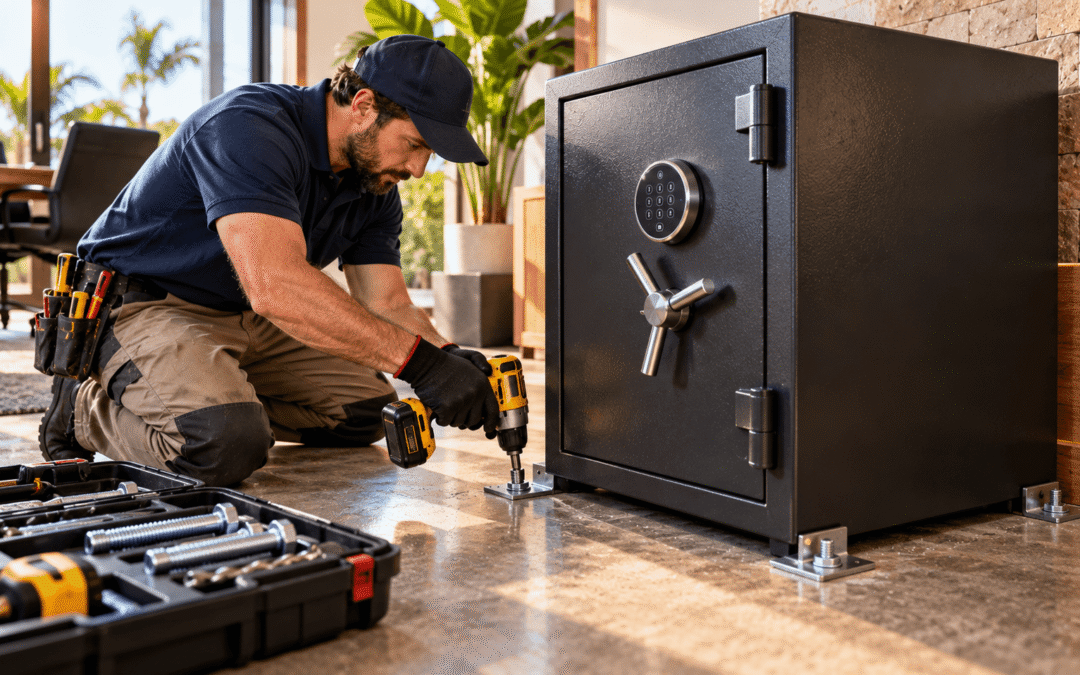
Yes, you should usually bolt a safe to the floor when the model supports anchoring, and the property allows it. Bolting makes the safe harder to tip, drag, or remove during a break-in. It also keeps tall units stable when someone opens a heavy door.
However, the correct method depends on the safe, floor material, location, and manufacturer’s instructions. Concrete and wood floors require different anchors, tools, and preparation. Renters may also need their landlord’s approval before drilling.
This guide explains when anchoring makes sense, where to place the safe, what installation involves, and when professional help can prevent damage to the safe or property during years of use.
Bolt a Safe to the Floor
Bolting is not required for every safe, but it is strongly worth considering. A freestanding unit can be moved if it is light enough or accessible from several sides.
Anchoring connects the safe to the building structure. This makes removal more difficult and reduces movement when the door opens.
Before drilling, confirm that the safe includes approved anchor points. Check the floor for utilities, moisture concerns, and structural limitations.
If the safe is rented, leased, or located in a rental property, get written permission before making permanent changes.
Why Should You Bolt a Safe to the Floor?
The main reason is simple: a safe cannot protect its contents if someone removes the entire unit. Anchoring creates another obstacle beyond the lock and steel body.
A securely mounted safe is also more stable. Large doors can shift the weight forward, especially when interior shelves or drawers are lightly loaded.
Bolting may provide the following practical benefits:
- Makes the safe harder to carry away
- Reduces access for prying tools
- Prevents tipping during normal use
- Keeps the safe in its planned position
- Discourages quick removal attempts
- Supports safer operation around children
Anchoring does not make a safe impossible to attack. It strengthens one important part of a broader security plan.
When Should You Bolt a Safe to the Floor?
Small and medium units benefit because several people may be able to lift them. Compact safes also fit onto carts or other moving equipment.
Tall safes can become unstable when their heavy doors swing open. Anchoring reduces the chance of forward movement or tipping.
Businesses should consider securing deposit safes, office safes, and units holding cash or records.
Even a heavy safe may need anchors. Weight alone does not stop determined removal, especially when the unit sits near an accessible exit.
When shopping for safes in Tampa, ask whether each model includes floor holes and approved anchoring hardware.
When Might Floor Bolting Be Impractical?
Some properties cannot accept floor drilling. Rental agreements, post-tension concrete, radiant heating, buried utilities, or special flooring can limit installation options.
Anchoring may also be unsuitable when the safe lacks manufacturer-approved mounting points. Drilling through the body can affect construction and damage protective materials.
A property owner may plan to relocate the unit soon. In that case, delaying permanent installation could prevent avoidable floor repairs.
Ask a qualified technician to review the location when floor conditions are uncertain. Guessing can damage flooring, utilities, or the safe itself.
Choose the Location Before Drilling
Safe placement affects privacy, access, stability, and installation quality. Select the location carefully because moving an anchored safe requires additional work.
Look for a position that:
- Keeps the safe away from casual view
- Provides enough room for the door
- Has a strong, level floor
- Allows comfortable keypad or dial access
- Limits access to the safe’s sides and back
- Avoids obvious moisture sources
- Leaves space for professional installation
Check the door swing before final placement. Shelves, walls, furniture, and baseboards can prevent full access to interior compartments.
The location should also suit regular use. A safe that is too difficult to reach may encourage people to leave valuables outside it.
Can You Bolt a Safe to Concrete?
Concrete often provides a strong anchoring surface. Installation normally uses masonry-rated anchors placed through factory holes in the safe floor.
The installer must confirm slab conditions before drilling. Post-tension cables, pipes, electrical lines, and moisture barriers may be hidden below the surface.
Correct hole depth and diameter matter. A poorly sized opening can prevent the anchor from gripping as intended.
The safe should sit level before tightening. Uneven floors may require suitable shims that do not undermine stability.
Concrete installation creates dust and vibration. Protect the lock, contents, finished surfaces, and nearby equipment during the work.
Can You Bolt a Safe to a Wood Floor?
Wood-floor installation requires a connection to structural framing or another suitable support. Fastening only into thin flooring may provide limited holding strength.
Floor joists are not always positioned beneath the safe’s factory holes. An installer may need to evaluate access from below or recommend reinforcement.
The floor must also support the safe’s weight. Large units can place substantial load across a small area.
Carpet, tile, or finished wood adds another challenge. Cutting and drilling should avoid unnecessary surface damage while keeping the unit level.
Do not assume that longer bolts always create a stronger installation. The fastener, structure, and safe must work together.
How Is a Safe Bolted Down?
The exact process varies by model and floor type. A typical professional installation follows a careful sequence.
The technician may:
- Confirm the safe’s approved anchor points
- Inspect the floor and planned position
- Check for known utilities or structural concerns
- Move and level the safe
- Mark the drilling locations
- Protect the safe and surrounding finishes
- Drill correctly sized holes
- Install suitable anchors
- Tighten the hardware evenly
- Test stability and door operation
The safe should not rock, twist, or shift after installation. The door and lock should operate normally without binding.
Keep any removed plugs or interior panels. These parts may be needed if the safe is moved later.
Does Bolting Affect Fire or Water Protection?
Use only the factory mounting points and methods approved for the safe. Unauthorized drilling can disturb insulation, seals, or other protective construction.
Some units include removable floor plugs designed for anchor access. These openings should be handled according to the manufacturer’s instructions.
Anchoring alone does not improve a safe’s fire rating or make it waterproof. Those qualities depend on the tested design and condition of the unit.
Water can also enter through floor openings if moisture reaches the installation area. Basements and flood-prone locations need careful planning.
Ask how the anchoring method affects the specific safe before work begins. Product documentation should guide the installation.
Common Anchoring Mistakes to Avoid
Poor installation can damage both the safe and property. Avoid these frequent mistakes:
- Drilling without checking the floor structure
- Using anchors not suited to the surface
- Ignoring factory mounting instructions
- Tightening bolts against an uneven floor
- Placing the safe where its door cannot open fully
- Anchoring through unstable decorative flooring
- Moving a heavy safe without suitable equipment
- Assuming weight alone prevents removal
Another mistake is choosing the location only for convenience. The most accessible place may also be the easiest for visitors to notice.
Balance privacy with practical use. Authorized users should reach the safe without exposing it to unnecessary attention.
Questions to Ask Before Installation
Good planning begins with clear questions. Ask the safe provider or installer:
- Does this model support floor anchoring?
- Are factory anchor holes already provided?
- Which fasteners suit the floor?
- Could drilling affect utilities or structural systems?
- Will finished flooring need modification?
- Can the safe be moved without major repairs?
- Does anchoring affect product coverage or protection?
- Is the selected location level and structurally suitable?
Photographs of the room and floor may help during early planning. An on-site inspection provides a clearer understanding of the conditions.
FAQ
Can Someone Steal a Safe That Is Bolted Down?
Anchoring makes removal more difficult but does not guarantee that theft cannot occur. Safe construction, placement, surrounding barriers, and monitored security also matter.
Is a Heavy Safe Safe Without Bolts?
Weight can slow removal, but it does not prevent tipping or movement. Large doors can also shift the unit forward during use.
Can I Bolt a Safe Through Carpet?
Yes, when the anchors connect to a suitable structure below. The carpet must be protected from damage during drilling.
Should a Safe Be Bolted to a Wall or Floor?
Floor anchoring often provides a strong connection. Some models also support wall attachment. Follow the safe manufacturer’s approved mounting options.
Will Bolting a Safe Damage the Floor?
Installation creates holes, but careful drilling limits unnecessary damage. Moving the safe later may require filling or repairing those areas.
Make the Safe Part of the Building
You should usually bolt a safe to the floor when approved mounting points and suitable structural conditions are available. Correct anchoring improves stability and makes quick removal more difficult.
Contact Affordable Lock & Security for help choosing, positioning, and securing a safe for your Tampa-area home or business.