
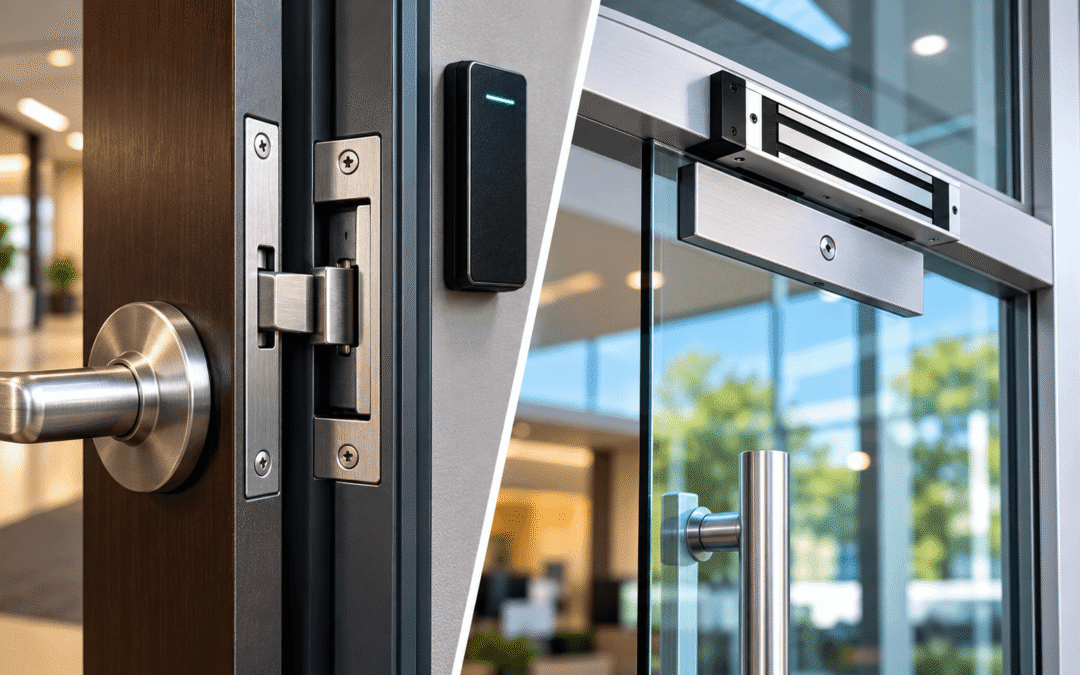
An electric strike often suits a standard commercial door with an existing latch, while a maglock commonly fits glass or high-traffic entrances. Neither device is better for every property. The right choice depends on the door, frame, exit method, power response, and daily use. This electric strike vs. maglock comparison explains how both options work and where each performs best. Tampa business owners can use the guide to understand overall security, appearance, maintenance, and installation needs before requesting an estimate. A professional inspection remains important because electronic hardware must match the complete opening. The lock, hinges, closer, reader, and exit controls should operate together reliably every day for everyone.
Electric Strike or Maglock?
Choose an electric strike lock for a conventional wood or metal door with compatible latch hardware. It offers a discreet appearance and can preserve familiar mechanical exit operation.
Consider a magnetic door lock for frameless glass, aluminum storefronts, or openings that cannot easily accept a strike. Maglocks have few moving components and work well under frequent use.
How Does an Electric Strike Work?
An electric strike replaces the standard strike plate in the frame. The door’s existing latch rests inside the strike when the entrance is secured.
After a reader accepts a card, code, fob, or mobile credential, the strike releases the latch. The authorized person then opens the door using its regular handle.
Businesses can connect the hardware to a complete access control system. Controllers and software then manage credentials, schedules, and user permissions.
A fail-secure strike remains locked from outside when power stops. A fail-safe version unlocks. Electric strikes also preserve a clean appearance and support several credential types.
When an Electric Strike May Not Fit
The frame needs enough space for the strike and cable. Narrow aluminum frames and frameless glass doors may not provide suitable mounting space.
Alignment also matters. A sagging door can press the latch against the strike, causing unreliable release. Repairing the hinges or closer may solve the underlying problem.
How Does a Maglock Work?
A maglock has an electromagnet mounted above the opening and a metal plate attached to the door. Continuous power creates the bond that holds the entrance closed.
When the access system approves a credential, it temporarily removes power. The magnetic bond releases, allowing entry.
This design does not rely on a latch entering the frame. It can therefore suit glass doors and other openings where installing an electric strike would require major changes.
Maglocks provide strong holding force, contain few moving parts, and handle frequent entry cycles. Proper mounting keeps the magnet and plate in consistent contact.
What Should Businesses Consider?
A maglock needs power to stay locked. It releases when electricity stops, which makes it fail-safe by design. Backup power may support operation during a short outage.
Electric Strike vs. Maglock: Key Differences
| Feature | Electric strike | Maglock |
| Locking method | Releases an existing latch | Uses an electromagnetic bond |
| Common door types | Wood and hollow metal | Glass and aluminum |
| Power behavior | Available in fail-safe or fail-secure models | Normally unlocks without power |
| Appearance | Mostly fitted within the frame | Visible above the opening |
| Moving parts | Includes mechanical components | Has few moving components |
| Exit operation | Often uses existing hardware | Needs dedicated release controls |
| Installation need | Requires frame space and alignment | Requires secure mounting and continuous power |
This electric strike vs. maglock table provides general guidance. An on-site review may identify door conditions that make one option more practical.
Which Lock Fits Each Door Type?
Electric strikes commonly fit wood and hollow-metal doors with compatible latches. Damaged frames may need commercial locksmith services before electronic hardware is added.
Maglocks often suit frameless glass because these doors lack a conventional strike pocket. Framed glass entrances may support either choice.
Doors with panic bars need coordinated locking and release hardware. Affordable Lock offers exit device services for commercial openings.
Which Option Offers Better Security?
Both devices can control entry effectively when installed on a sound door. A strong lock cannot correct loose hinges, a damaged frame, or poor alignment.
An electric strike may suit a business that wants the outside secured during a power loss. That setup requires a compatible fail-secure model.
A maglock provides consistent holding force while powered. Its performance depends on correct mounting, clean contact surfaces, reliable power, and suitable release controls.
Credential management also supports security. A commercial access control system lets managers remove lost cards and update permissions without replacing every lock.
What Should You Ask Before Installation?
Ask whether the door needs repair, what happens during an outage, and how users will exit. Discuss credentials, future expansion, maintenance, and possible camera integration. Clear answers make estimates easier to compare.
Request written details for every included component and service.
FAQ
Is an Electric Strike More Secure Than a Maglock?
Not automatically. Both can provide effective access control. The complete door, frame, mounting, credential settings, and installation quality determine overall performance.
Does a Maglock Unlock During a Power Outage?
Yes. A standard maglock releases when power stops. A properly selected backup power source may keep the access system working during temporary outages.
Can an Electric Strike Work Without Power?
A fail-secure strike remains locked from the exterior without power. A fail-safe strike unlocks. In both cases, the interior hardware should provide the required exit operation.
Can Both Locks Use Key Cards?
Yes. Either lock can connect with a reader and controller that accepts cards, fobs, PIN codes, or mobile credentials.
Which Lock Is Better for a Glass Door?
A maglock often fits frameless glass more easily. Framed glass doors may support other options after a professional evaluates the frame and existing hardware.
Select the Right Lock for Your Entrance
The best electric strike vs. maglock choice depends on door construction, traffic, appearance, power behavior, and exit needs. A site assessment can identify compatible hardware without adding unnecessary features.
Contact Affordable Lock & Security for help planning a dependable access control solution for your Tampa-area business.